
From Filing to Final Vote: Understanding the MA Legislative Process and How You Can Take Action

When a community member, nonprofit organization, legislator, or anyone else wants to see a change or addition to the law in Massachusetts, they typically must go through the legislative process. This can take up to 2 years to complete. If a bill does not pass before the end of the two-year legislative session, it is often reintroduced in the next session, meaning that advocates often pursue a bill across multiple sessions before it becomes law. While it can be frustrating to see bills stall or have to be refiled session after session, persistence is what drives long-term success.
Legislative processes vary across the country, as each state operates under its own rules and regulations that govern the legislature. These differences can include the length of a legislative session, committee procedures, and the number of steps a bill must go through before reaching the Governor’s desk. This blog post provides an overview of the MA legislative process, explains where most of the bills on MA Appleseed’s legislative agenda currently stand, and highlights ways you can take action!
On the first Wednesday in January of odd-numbered years, the Massachusetts Legislature enters a new legislative session. Each session, 5,000+ bills are filed and follow the legislative process, pausing at various stages, where they advance to the next stage, pause any movement, or are completely halted. What does each stage look like?
The formal process begins when a legislator files a bill with the House or Senate Clerk’s Office. That Clerk assigns the bill a number and committee based on its subject matter (for example, K-12 education bills are typically assigned to the Joint Committee on Education)
Once assigned, Committees schedule public hearings where any member of the public can provide testimony in support of or opposition to a bill. Testimony can be given orally, as seen here, or submitted in writing. Because speaking time is often limited, written testimony gives people the opportunity to give a more detailed argument. After the hearing, the Committee is given a certain amount of time to report the bill out favorably, unfavorably, or to study. Starting in the 2025 session, new rules were introduced that require House and Senate members of Joint Committees to vote separately and on different timelines.
If reported favorably, the bill moves to the next stage. Bill involving funding are often reported to the Joint Committee on Ways and Means, though other bills may be sent there as well. If the bill passes this stage, it goes through additional readings before reaching the Governor, who has 10 days to sign or veto the bill. If vetoed, the Legislature can override the veto by a 2/3 vote in both the Senate and House.
Most of the bills on our agenda are before the House and Senate Committees on Ways and Means, which is an important step forward, but with much more progress needed. You can see the status of specific bills here.
With most of the bills being before House and Senate Ways and Means, we are now pushing the Committee and their chairs to report the bills out and send them to the floor for a full vote. Interested in joining advocacy with us?
Take 2 minutes to see if your legislators sit on this Committee and if they do, you can use a templated letter we created to urge them to pass the Language Access and Inclusion Act: https://tinyurl.com/34yn74fp
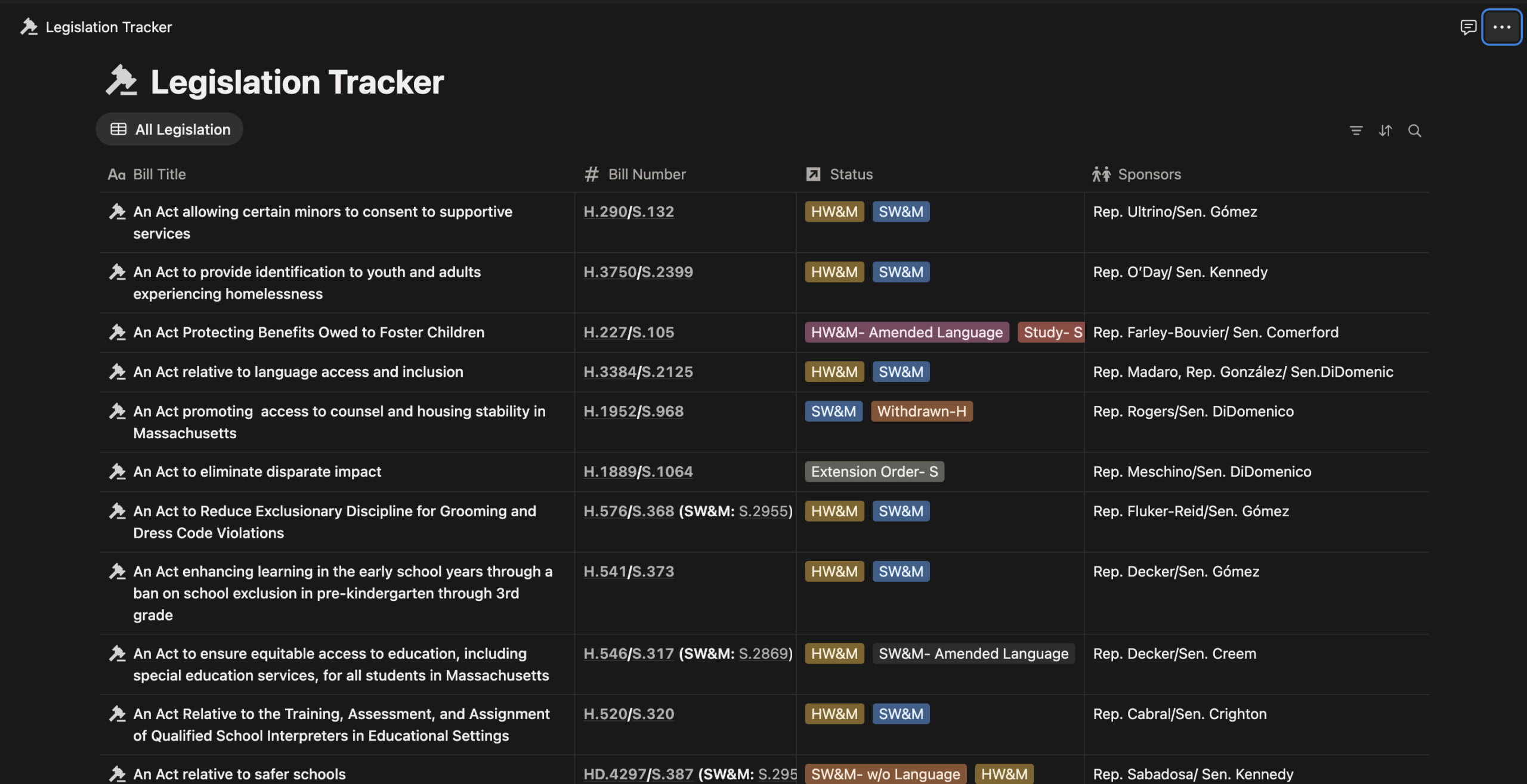
Legislation Tracker
Want to help push our school discipline bills? Sign the petition here.
Policy change can be complex and rarely quick, but it is possible, especially with the support of sustained public engagement. Each stage of the legislative process offers opportunities for people to make their voices heard, whether it be by submitting testimony, contacting legislators, or raising awareness.
Continue to follow our work from the policy proposal stage all the way to policy enforcement and implementation, as we work to build a more equitable Commonwealth.
